News
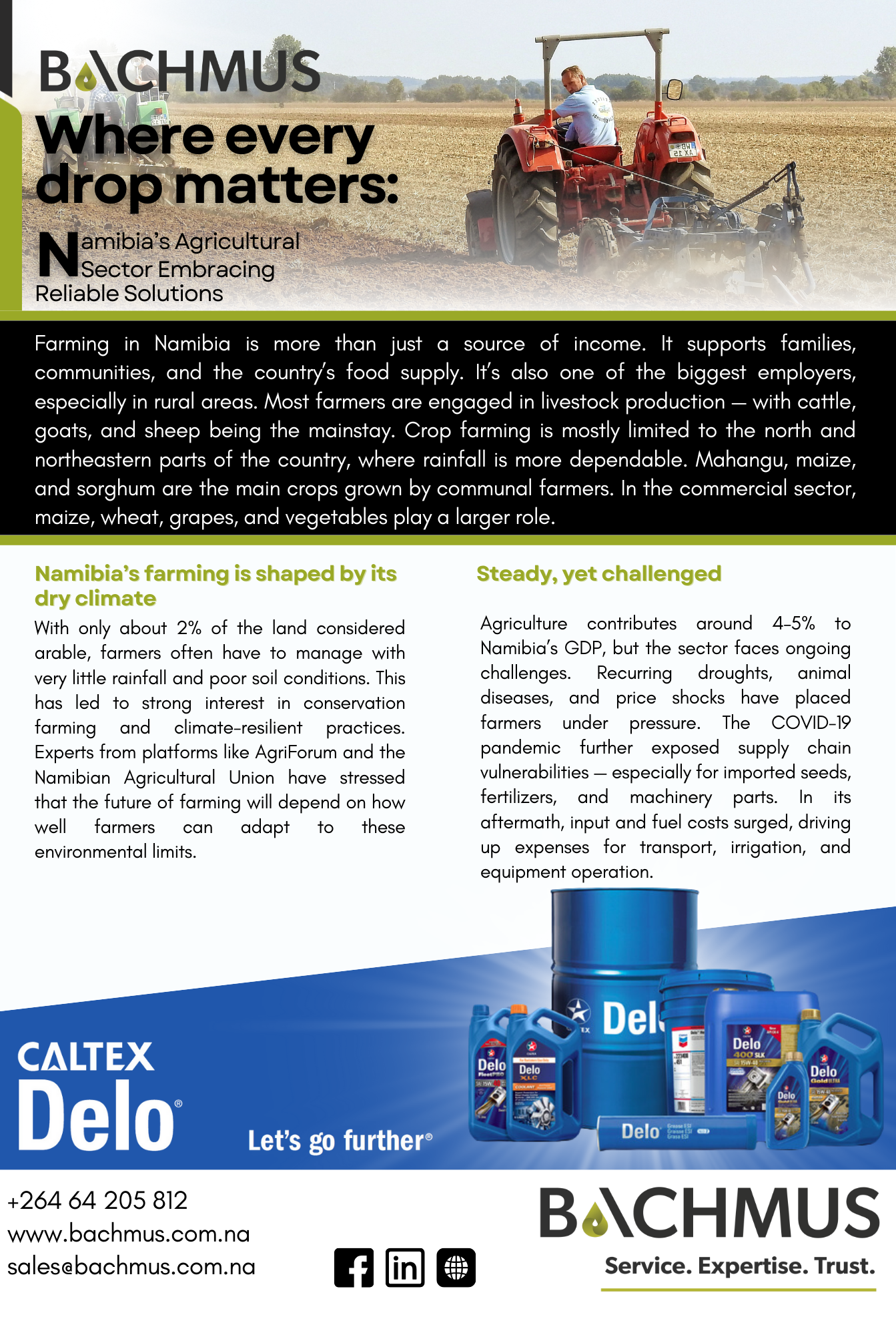
Farming in Namibia is more than a livelihood—it sustains families, communities, and the nation’s food supply. Despite contributing 4–5% to the country’s GDP, agriculture faces significant challenges, from limited arable land and erratic rainfall to rising input costs and recurring droughts. Most farmers are engaged in livestock production, while crop farming is mainly practiced in the more fertile northern regions. Mahangu, maize, and sorghum are staple crops, with commercial farms also producing wheat, grapes, and vegetables.
With only 2% of land considered arable, farmers must adapt to harsh conditions marked by low rainfall and poor soil. This reality has sparked interest in climate-resilient farming methods and conservation practices. At the same time, the sector grapples with high equipment and fuel costs, especially in the wake of global supply disruptions and the COVID-19 pandemic.
Large-scale farming operations rely heavily on machinery—tractors, harvesters, and planters—which are expensive to maintain and vulnerable to wear and tear. In this context, the quality of lubricants becomes critical. Inferior oils can cause breakdowns at the worst times, affecting planting and harvesting windows.
Bachmus, in partnership with Caltex, provides farmers with reliable, high-performance lubricants through its national supply footprint. Caltex Delo products are designed to keep engines running smoothly even in dusty, remote conditions. As Namibian farmers increasingly adopt precision tools like GPS-guided equipment, drones, and solar-powered pumps, dependable fuel and lubricants are more essential than ever.
Ultimately, farmers are no longer focused on the price per litre—they value protection, performance, and longevity. With Caltex and Bachmus, they gain one less thing to worry about, knowing their equipment will run—and keep running—when it matters most.